
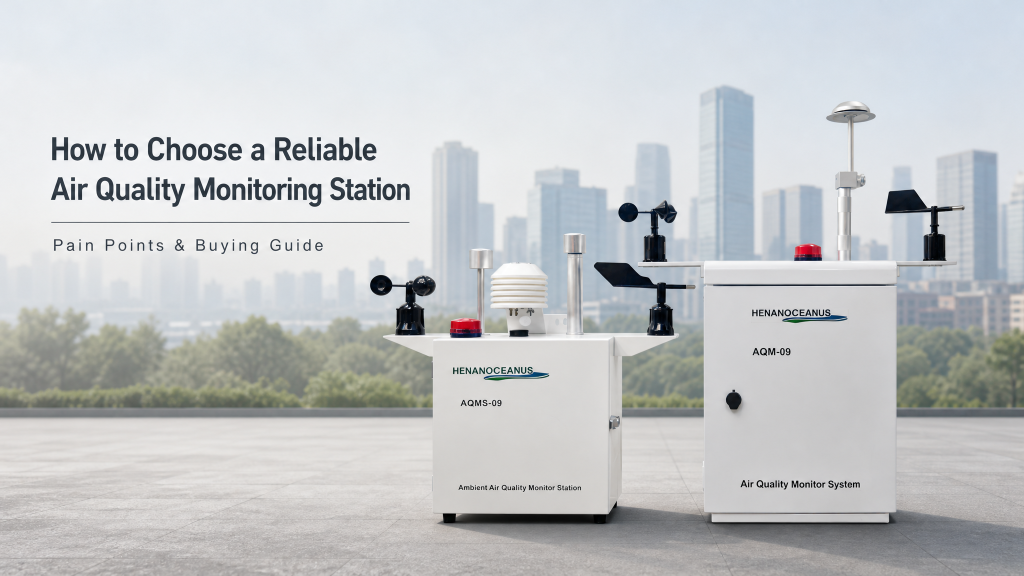
Compact air‑quality micro‑stations are widely used these days. Instead of relying only on a small number of expensive reference monitoring devices, many projects install lots of small stations across cities, factories and construction sites. These units help you spot pollution hotspots and track real‑time air changes.
But many buyers run into annoying problems after installation. A few months later, readings start to go wrong. The data no longer lines up with official reference equipment. Sometimes multiple units break down or lose accuracy all at once.
Most of these issues are not caused by one bad sensor. It comes down to poor overall device design. Many customers only compare price and how many pollutants the machine can test. They overlook practical features: can it stand bad weather? Can it clean incoming air sample? Can it fix sensor errors automatically? How easy is it to repair? These features decide whether you get trustworthy data year after year.
Common Real‑World Problems for Monitoring Networks
- Data does not match official reference stations You cannot just calibrate the machine once and forget it. Readings shift when humidity, temperature or mixed pollutants change. One‑time calibration will not fix this ongoing bias.
- Slow hidden accuracy drift A device may work perfectly when you first install it. As time passes, its readings slowly go off‑target. Without regular self‑checks, you will not notice until a major pollution event happens.
- Multiple units fail around the same time Stations installed together age together. Their filters and sensor parts wear out at similar times. This can make your whole monitoring network perform poorly, not just one single device.
Practical Field Troubles You Need to Know
Bad weather messes up readings
High humidity and water vapor create false readings for gas and dust sensors. At industrial sites, different gases mix together and interfere with each other, creating consistent wrong results.
No built‑in data quality check
Cheap monitors send raw sensor data directly to the cloud. If sensors get damaged or power cuts happen, wrong data still gets uploaded. Misleading bad data is worse than having no data at all.
Power, network and repair headaches
If cellular signal cuts out and the device cannot store data locally, you lose all records. Bad power design makes machines shut down easily. Non‑modular hardware means simple repairs take weeks.
What You Can and Cannot Expect from Micro‑Stations
These small monitors are great for early‑warning and finding pollution hotspots. However, their dust measurement results are not precise enough to be used as legal evidence for punishment. Keep this in mind for your project expectations.
Simple Buying Tips for Different Sites
- City streets & parks: Prioritise humidity resistance and stable data upload.
- Industrial park borders: Must have dehumidification and gas‑interference correction.
- Mines & construction sites: Need heavy‑dust filters and tough outer casing.
- Port / coastal areas: Anti‑corrosion parts and better dehumidification matter most.
- Remote off‑grid sites: Think about power supply first, before looking at sensor specs.
Always ask for third‑party test reports. Check for air pre‑filter, proper enclosure rating, offline data storage and easy‑to‑replace parts.
AQM‑09 vs AQMS‑09
AQM-09 Air Quality Monitoring System Best for large‑scale city‑wide monitoring networks. Built‑in heating stops humidity‑caused errors. One sampling cutter covers PM1, PM2.5, PM10 and TSP. Dual‑network connection keeps data flowing. Optional outdoor LED screen for public display. Proven track record in many global projects.
AQMS-09 Ambient Air Quality Monitor Station Low‑power model. Uses active pump air‑sampling. Higher dust measurement resolution down to 0.1 µg/m³. Fixes humidity and cross‑gas errors automatically. Can trigger alarms or turn on external equipment when pollution levels get too high.
Conclusion
Good air quality monitoring networks live or die by real‑world data reliability, not the number of measurable parameters on a spec sheet.
Field‑deployed micro‑stations work great for spotting pollution hotspots and tracking trends, but remember their limits: they cannot serve as legal enforcement evidence. Humidity, mixed‑gas interference, unstable power and poor maintainability are the most common causes of project headaches.
Talk with our engineering team to get datasheets or share your project situation.
Whatsapp: +86 15981942832
Email: info@china-oceanus.com