
Construction activities are essential to urban development, but they can also generate significant amounts of airborne dust and pollutants. Activities such as excavation, demolition, material handling, concrete cutting, and vehicle movement can release large quantities of particulate matter into the surrounding environment.
Without effective monitoring and control, these pollutants may affect nearby communities, create environmental compliance risks, and expose construction workers to potential respiratory hazards.
Construction site air quality and dust monitoring provides a practical way to identify pollution levels, support environmental management, and create safer working conditions.
1. Why Is Air Quality Monitoring Important on Construction Sites?
Dust pollution is one of the most common environmental challenges at construction sites. Fine particles can remain suspended in the air and travel beyond the immediate work area.
Continuous exposure to airborne particles may contribute to respiratory irritation and other health concerns, particularly for workers who spend long hours in dusty environments.
In addition to occupational health considerations, construction sites may need to meet local environmental requirements for dust and particulate emissions.
Effective air quality monitoring helps construction managers:
- Identify periods of elevated dust pollution.
- Understand how construction activities affect surrounding air quality.
- Evaluate the effectiveness of dust suppression measures.
- Maintain monitoring records for environmental management and reporting.
- Support compliance with applicable local regulations.
2. Key Parameters for Construction Site Dust Monitoring
Different monitoring parameters provide different information about air quality. Particulate matter is especially important in construction environments.
PM2.5 – Fine Particulate Matter
PM2.5 refers to airborne particles with a diameter of 2.5 micrometers or smaller. Due to their small size, these particles can penetrate deep into the respiratory system. They may come from combustion sources, construction machinery, vehicle emissions, and other activities.
PM10 – Inhalable Particulate Matter
PM10 includes particles with a diameter of 10 micrometers or smaller. Construction activities such as excavation, crushing, drilling, and material transportation are common sources of PM10 emissions.
TSP – Total Suspended Particulates
TSP represents a broader range of suspended particles in the air. Monitoring TSP can help assess overall dust pollution around construction areas.
Depending on project requirements, monitoring systems may also measure meteorological parameters such as wind speed, wind direction, temperature, and humidity. These measurements help explain how weather conditions influence dust movement and dispersion.
3. How Real-Time Monitoring Improves Dust Control
Traditional manual inspections provide useful observations, but they may not capture short-term pollution peaks or changes throughout the day.
A real-time air quality monitoring system offers continuous data collection and helps site managers respond more quickly to changing conditions.
A typical monitoring process includes:
Continuous Data Collection
Monitoring equipment collects particulate matter and other selected environmental data at designated locations around the construction site.
Remote Data Access
With a connected monitoring platform, authorized personnel can view monitoring results remotely, reducing the need for frequent on-site data checks.
Pollution Alerts
When measured values exceed project-defined or applicable regulatory thresholds, the system can help notify responsible personnel so that they can investigate and take action.
Data Recording and Analysis
Historical monitoring data helps identify pollution trends, compare conditions before and after dust-control measures, and support environmental reports.
4. Practical Measures to Reduce Construction Dust
Monitoring is only one part of effective dust management. The collected data should be used together with practical pollution-control measures.
Common dust suppression practices include:
- Water Spraying: Apply water to exposed soil, roads, and dusty working areas to reduce airborne particles.
- Material Covering: Cover sand, soil, and other loose materials during storage and transportation.
- Vehicle Management: Control vehicle speeds and maintain construction access roads to reduce road dust.
- Enclosure and Barriers: Use suitable barriers or enclosed work areas where dust-generating activities take place.
- Equipment Maintenance: Maintain construction machinery and vehicles to help reduce unnecessary emissions.
By comparing monitoring data before and after these measures, site managers can better understand whether their dust-control strategies are working.
5. Choosing the Right Air Quality Monitoring System
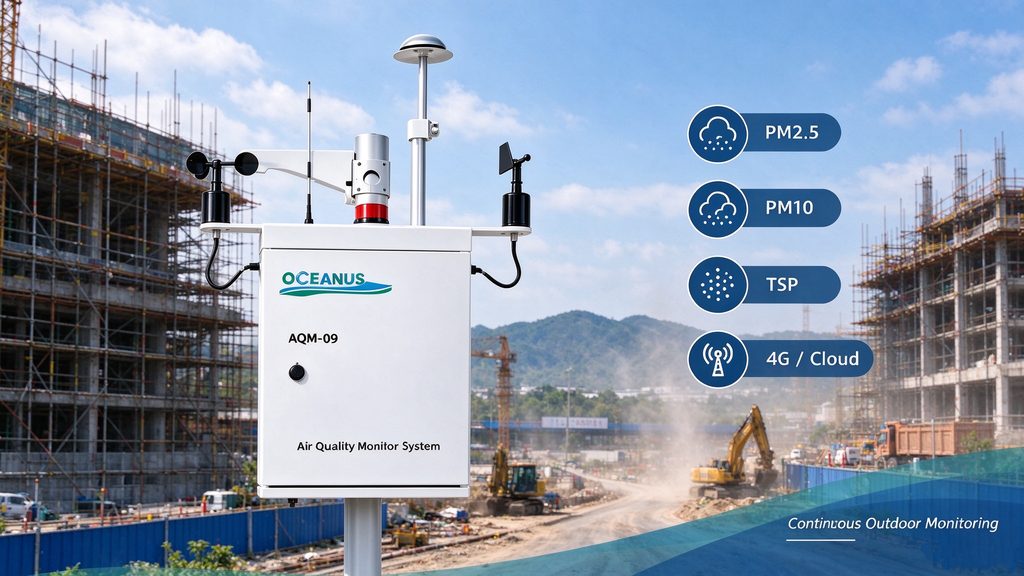
A suitable monitoring solution should match the size, working conditions, and environmental requirements of the construction project.
When selecting equipment, consider the following factors:
- Monitoring Capability: Confirm that the system supports the required parameters, such as PM2.5, PM10, and TSP.
- Real-Time Monitoring: Choose equipment that provides timely data updates for ongoing site management.
- Remote Communication: Wireless connectivity and cloud-based access can make monitoring data easier to review.
- Outdoor Durability: Construction sites often experience dust, rain, wind, and changing temperatures. Equipment should be suitable for the intended outdoor environment.
- Flexible Installation: Consider the installation location, mounting options, power supply, and project layout.
For large or complex construction projects, multiple monitoring points may be needed to understand dust levels in different working areas and around site boundaries.
6. Building Safer and More Responsible Construction Sites
Construction site air quality monitoring is more than a way to collect environmental data. It supports better decision-making, more effective dust management, and improved awareness of potential exposure risks.
By combining real-time particulate monitoring, remote data access, and practical dust suppression measures, construction companies can strengthen environmental management while helping protect workers and surrounding communities.
Oceanus provides air quality monitoring solutions designed for different environmental monitoring needs. With monitoring options for particulate matter and other environmental parameters, these systems can support construction projects in tracking air quality and managing dust pollution.
A cleaner construction site starts with better monitoring and timely action.
Whatsapp: +86 15981942832
Email: info@china-oceanus.com