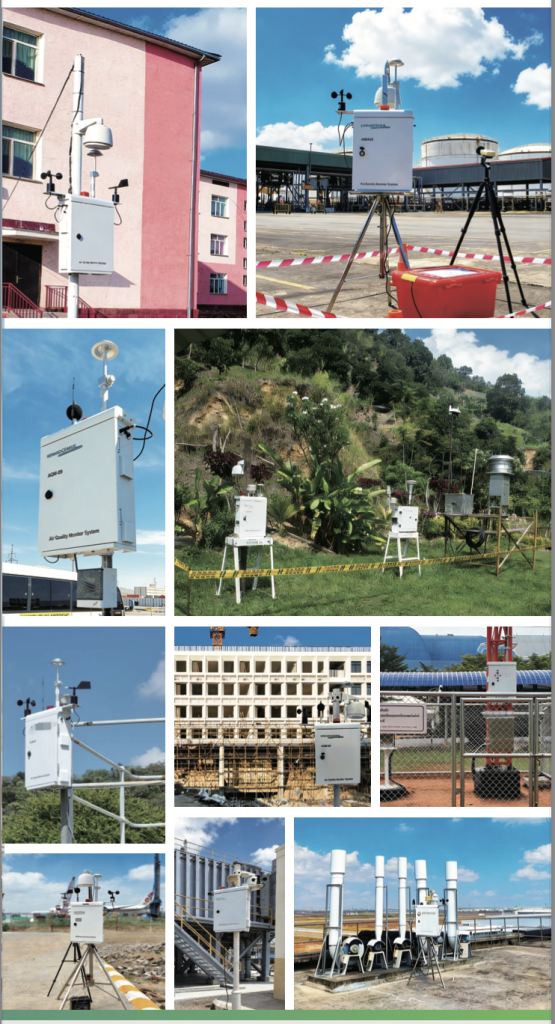
This article focuses on China’s air quality monitoring management practices, referencing 《HJ 664—2013 Technical Specifications for the Layout of Ambient Air Quality Monitoring Sites (Trial)》 and related monitoring standards. It covers requirements for the setup, sampling height, sampling environment, and sampling frequency of urban air quality monitoring sites.
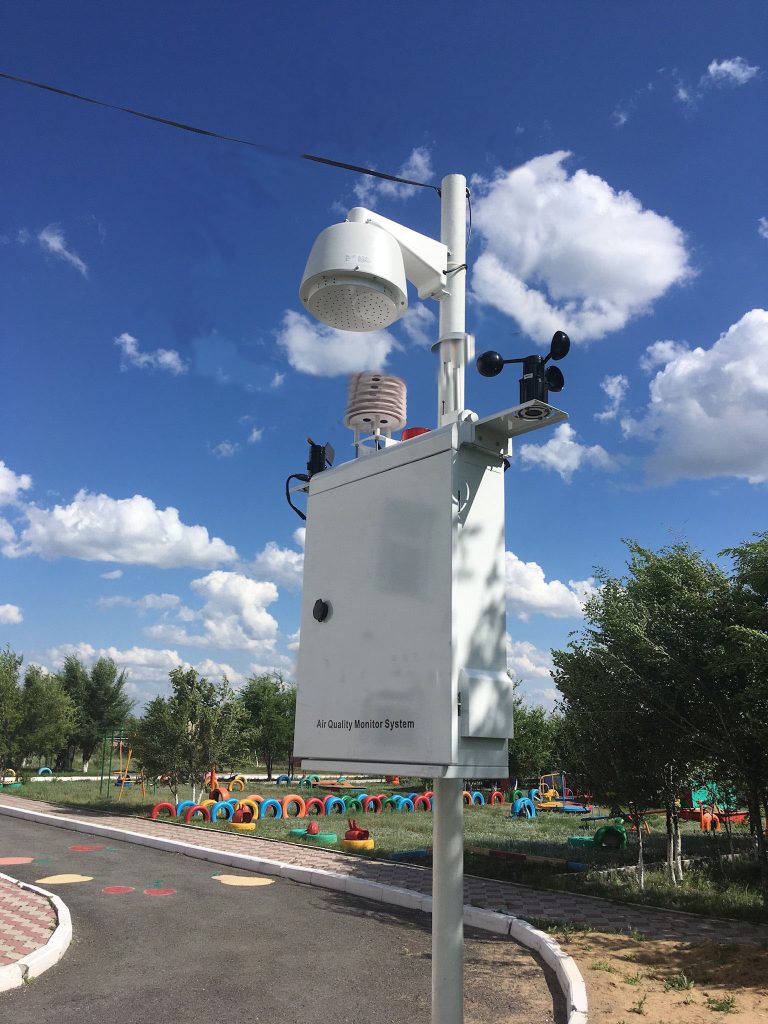
1. Site Layout Requirements
1.1. Layout Principles
– **Representativeness**: Reflect the overall air quality and variation patterns in urban built-up areas objectively.
– **Comparability**: Ensure consistent conditions for similar sites to enable data comparability.
– **Comprehensiveness**: Cover major functional zones, considering geographic, meteorological, industrial, and population distributions.
– **Forward-looking**: Align with urban planning to accommodate future spatial changes.
– **Stability**: Once determined, sites shall not be altered arbitrarily.
1.2. Minimum Number of Sites
(Determined by the larger value between built-up population and area)
| Built-up Population (10,000s) | Built-up Area (km²) | Minimum Monitoring Sites |
| <25 | <20 | 1 |
| 25–50 | 20–50 | 2 |
| 50–100 | 50–100 | 4 |
| 100–200 | 100–200 | 6 |
| 200–300 | 200–400 | 8 |
| >300 | >400 | 1 site per 50–60 km², minimum 10 sites |
1.3. Site Distribution
1.3.1. Located within urban built-up areas, distributed evenly to cover the entire area.
1.3.2. Representative radius: 500 m–4 km (up to tens of km in low-concentration zones).
1.3.3. Avoid direct influence from local pollution sources to ensure data represents the city’s overall air quality.
1.3.4. The relative error between the new site’s average concentration and the city-wide average (measured/simulated) shall be ≤10%.
1.3.5. The relative error between the 30th/50th/80th/90th percentiles of the new site and city-wide averages shall be ≤15%.
2. Sampling Height Requirements
2.1. Automatic Monitoring (Urban Standard Sites)
– Sampling inlet/beam height: 3–20 m above ground.
– If average building height within 300–500 m >25 m: 20–30 m.
– Distance from walls/roofs: >1 m.
2.2. Manual Sampling
– Sampling inlet height: 1.5–15 m above ground.
2.3. Roadside Traffic Sites
– Sampling inlet height: 2–5 m above ground.
3. Sampling Environment Requirements
3.1. Surrounding Environment
3.1.1. No tall buildings/trees nearby; horizontal distance ≥ twice the height difference, or elevation angle <30°.
3.1.2. Unobstructed air intake: ≥270° open space; ≥180° if adjacent to a building.
3.1.3. No obvious fixed pollution sources within 50 m.
3.1.4. Minimum distance from roads (by daily traffic):
| Daily Traffic (vehicles) | Minimum Distance for PM10/PM2.5 (m) | Minimum Distance for Gaseous Pollutants (m) |
| ≤3,000 | 25 | 10 |
| 3,000–6,000 | 30 | 20 |
| 6,000–15,000 | 45 | 30 |
| 15,000–40,000 | 80 | 60 |
| >40,000 | 150 | 100 |
3.1.5. Stable ground, fire safety, reliable power/communication, no strong electromagnetic interference.
3.2. Multiple Sampling Inlets
3.2.1. Distance between particulate and gas inlets: >1 m.
3.2.2. For parallel TSP high-volume sampling: >2 m.
4. Sampling Frequency (Routine Monitoring)
4.1. Automatic Monitoring (Urban Standard)
– 24/7 continuous online monitoring.
– Calculates hourly, daily, annual averages.
– Monitored items: SO₂, NO₂, CO, O₃, PM₁₀, PM₂.₅.
4.2. Manual Monitoring (Auxiliary/Verification)
– Gases: Hourly sampling → hourly average.
– Particulates: 24-hour sampling → daily average.
– Routine: At least 1 sampling day per week (all weather).
– QA: At least 2 manual vs. automatic comparisons annually.