
George Orwell once wrote:“To see what is in front of one’s nose requires a constant struggle.”
In today’s fast-paced world, we often focus on technology, productivity, and convenience while overlooking something far more fundamental — the air we breathe every day.
Clean air is essential to life, yet air pollution remains one of the most serious environmental and public health challenges worldwide. In many rapidly growing cities, poor air quality has become a recurring concern, affecting millions of people and significantly impacting quality of life.
The Growing Impact of Air Pollution
Every year, numerous cities across the world experience periods of severe air pollution. Dense smog, reduced visibility, and elevated pollutant levels can create hazardous conditions for residents, businesses, and public institutions alike.
Air pollution is not merely an environmental issue. Scientific research has linked long-term exposure to polluted air with a wide range of health conditions, including:
- Respiratory diseases
- Cardiovascular disorders
- Stroke
- Lung cancer
- Chronic obstructive pulmonary disease (COPD)
- Adverse pregnancy outcomes
- Cognitive decline and reduced mental performance
Many harmful pollutants are invisible to the naked eye. Fine particulate matter (PM2.5 and PM10), carbon monoxide (CO), nitrogen dioxide (NO₂), sulfur dioxide (SO₂), ozone (O₃), and volatile organic compounds (VOCs) can penetrate deep into the lungs and even enter the bloodstream, causing long-term damage to vital organs.

Understanding the Sources
Air pollution rarely originates from a single source. Instead, it is often the result of multiple contributing factors working together.
Common sources include:
- Vehicle emissions
- Industrial activities
- Construction dust
- Agricultural burning
- Power generation
- Residential fuel combustion
Weather conditions can further worsen pollution levels. Low wind speeds, temperature inversions, and seasonal changes can trap pollutants close to the ground, causing concentrations to rise significantly.
As urban populations continue to grow, understanding and managing these pollution sources has become increasingly important.
Why Monitoring Matters?
One of the biggest challenges in addressing air pollution is that it cannot always be seen or felt immediately.
Without reliable data, it is difficult for individuals, organizations, and authorities to understand the true extent of air quality issues or make informed decisions.
The principle is simple:
We cannot effectively manage what we do not measure.
Accurate air quality monitoring provides real-time insights into environmental conditions and helps identify pollution trends before they become critical.
Reliable monitoring enables:
- Better environmental awareness
- Data-driven decision-making
- Faster response to pollution events
- Improved public health protection
- Enhanced workplace and indoor environmental management
The Role of Indoor and Outdoor Air Quality Monitoring
Air quality monitoring is important both indoors and outdoors.
Indoor environments such as homes, schools, hospitals, offices, and commercial buildings can accumulate pollutants that negatively affect comfort, health, and productivity.
Outdoor monitoring, meanwhile, provides valuable information for municipalities, industrial facilities, environmental agencies, and urban planners seeking to understand and improve environmental conditions.
By continuously collecting and analyzing air quality data, organizations can make more informed decisions and take proactive measures to reduce risks.
Henan Oceanus Air Quality Monitoring Solutions
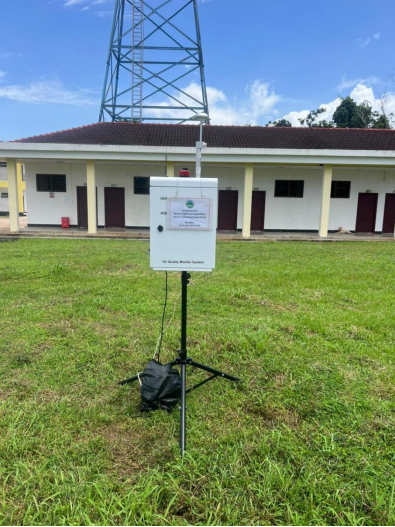
At Henan Oceanus, we believe that awareness begins with accurate data.
Our air quality monitoring solutions are designed to help organizations, institutions, and communities better understand their environment through reliable, real-time monitoring.
Our solutions support:
- Indoor/Outdoor Air Quality (IAQ) Monitoring
- Ambient Air Quality Monitoring
- Environmental Data Collection
- Smart City Applications
- Industrial Environmental Monitoring
- Schools, Hospitals, Offices, and Public Buildings
By transforming environmental data into actionable insights, we help our customers create healthier, safer, and more sustainable spaces.
Looking Ahead
Air pollution remains a complex global challenge, but meaningful action begins with understanding.
Monitoring air quality is not simply about collecting numbers. It is about protecting public health, supporting informed decisions, and building a more sustainable future for generations to come.
The air around us may be invisible, but its impact is undeniable.
The first step toward cleaner air starts with knowing what we are breathing.