
Introduction
Air pollution has become a major environmental challenge worldwide. Governments, environmental agencies, industrial facilities, construction companies, and smart city projects increasingly rely on air quality monitoring systems to obtain real-time environmental data.
Modern environmental monitoring stations can simultaneously measure gaseous pollutants, particulate matter, noise, and meteorological parameters, providing comprehensive environmental insights. Common pollutants include SO₂, NO₂, O₃, CO, CO₂, VOCs, H₂S, NH₃, PM2.5, PM10, and TSP.
This article explains which gases should be monitored in different application scenarios and why they are important.

1. Urban Air Quality Monitoring
Typical Applications
- Smart Cities
- Roadside Monitoring
- Environmental Protection Agencies
- Residential Communities
Key Gases to Monitor
| Gas | Source | Impact |
| NO₂ | Vehicle exhaust | Respiratory irritation |
| CO | Traffic emissions | Toxic at high concentration |
| O₃ | Secondary pollutant | Lung damage |
| SO₂ | Industrial combustion | Acid rain |
| CO₂ | Urban emissions | Climate indicator |
| VOCs | Fuel evaporation | Ozone formation |
Particulate Matter
- PM1
- PM2.5
- PM10
- TSP
Urban air monitoring networks commonly track NO₂, SO₂, O₃, CO, VOCs and particulate matter to evaluate pollution levels and support public health decisions.
2. Industrial Park Monitoring
Typical Applications
- Chemical Plants
- Petrochemical Facilities
- Steel Plants
- Power Stations
Key Gases to Monitor
| Gas | Why Monitor |
| SO₂ | Fuel combustion emissions |
| NO₂ | Industrial boilers |
| CO | Incomplete combustion |
| VOCs | Solvent evaporation |
| H₂S | Refining and wastewater processes |
| NH₃ | Chemical production |
| CO₂ | Carbon emission management |
Industrial sites often require continuous monitoring of VOCs, NO₂, CO, SO₂ and H₂S for compliance and worker safety.
Additional Parameters
- Temperature
- Humidity
- Wind Speed
- Wind Direction
These meteorological parameters help identify pollution dispersion patterns.
3. Construction Site Monitoring
Typical Applications
- Building Construction
- Road Construction
- Demolition Projects
- Mining Operations
Key Pollutants
| Parameter | Purpose |
| PM2.5 | Fine dust monitoring |
| PM10 | Construction dust |
| TSP | Total suspended particles |
| Noise | Community compliance |
Optional Gases
- CO
- NO₂
- VOCs
Construction projects primarily focus on dust and noise monitoring but may also monitor vehicle-related emissions.
4. Wastewater Treatment Plants
Typical Applications
- Municipal Wastewater Facilities
- Industrial Wastewater Plants
Key Gases
| Gas | Hazard |
| H₂S | Toxic and corrosive |
| NH₃ | Odor and health risk |
| CH₄ | Explosion risk |
| VOCs | Odor nuisance |
Why Monitoring Matters
Hydrogen sulfide is one of the most common gases generated during wastewater treatment and can pose serious health and odor concerns.
5. Landfill and Waste Management Facilities
Typical Applications
- Landfills
- Recycling Centers
- Waste Transfer Stations
Key Gases
| Gas | Source |
| CH₄ | Organic decomposition |
| H₂S | Waste degradation |
| NH₃ | Organic waste |
| VOCs | Industrial waste |
Monitoring helps prevent odor complaints, fire hazards, and environmental violations.
6. Ports and Logistics Areas
Typical Applications
- Container Ports
- Freight Yards
- Airport Cargo Zones
Key Gases
| Gas | Source |
| NO₂ | Diesel engines |
| CO | Vehicle exhaust |
| SO₂ | Marine fuel |
| PM2.5 | Transportation activities |
Port monitoring stations are widely deployed to assess the environmental impact of shipping and logistics operations.
7. Indoor Air Quality
Typical Applications
- Schools
- Hospitals
- Offices
- Shopping Malls
Key Gases
| Gas | Importance |
| CO₂ | Ventilation efficiency |
| TVOC | Indoor pollution |
| CH₂O (Formaldehyde) | Building materials |
| CO | Safety monitoring |
| O₃ | Air purification side effects |
Indoor air monitoring often focuses on CO₂, VOCs, formaldehyde, ozone, and particulate matter.
Common Gases Monitored by Environmental Monitoring Stations
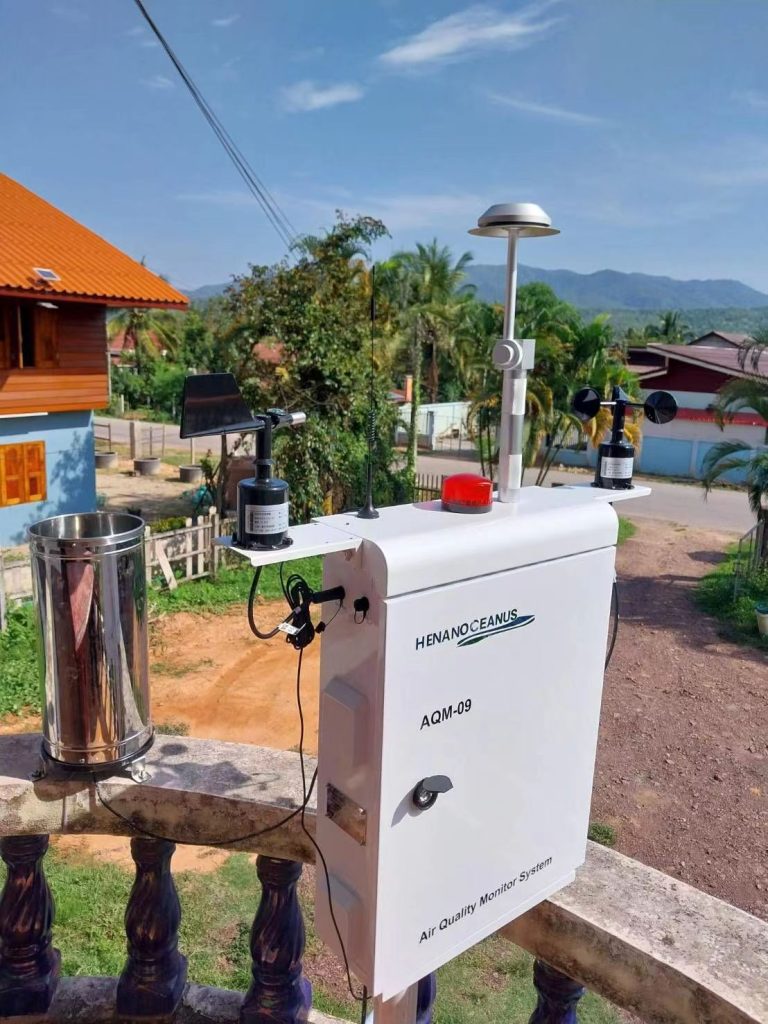
AQM-09 and similar ambient air monitoring stations can typically monitor:
Pollutant Gases
- SO₂ (Sulfur Dioxide)
- NO₂ (Nitrogen Dioxide)
- NO (Nitric Oxide)
- O₃ (Ozone)
- CO (Carbon Monoxide)
- CO₂ (Carbon Dioxide)
- TVOC
- H₂S (Hydrogen Sulfide)
- NH₃ (Ammonia)
- CH₄ (Methane)
Particulate Matter
- PM1
- PM2.5
- PM10
- TSP
Meteorological Parameters
- Temperature
- Humidity
- Wind Speed
- Wind Direction
- Barometric Pressure
- Rainfall
- Solar Radiation
Other Parameters
- Noise Monitoring
These pollutants are among the most commonly measured indicators in modern air quality monitoring networks.
Conclusion
Different environments require different monitoring strategies. Urban areas focus on traffic-related pollutants such as NO₂, CO, and O₃. Industrial facilities prioritize VOCs, SO₂, H₂S, and CO. Construction sites emphasize particulate matter and noise, while wastewater facilities require continuous monitoring of H₂S, NH₃, and CH₄.
By selecting the appropriate gas sensors and environmental parameters, organizations can improve environmental compliance, protect public health, and support sustainable development.